
Navigating women’s health can feel overwhelming, from puberty through menopause. Understanding how the body changes and when to seek care is key. OB/GYN Dr. Hannah Potter broke down the essentials, including the menstrual cycle, reproductive health, perimenopause, menopause and long-term health considerations.
Puberty and menstrual cycle basics
Puberty is the body’s way of preparing for reproduction.
“Puberty is a phase of rapid hormone changes, primarily driven by estrogen, which initiates physical development and prepares the body for potential reproduction,” Dr. Potter explained.
Key milestones include breast development, growth of pubic and underarm hair, a growth spurt and menarche, the first menstrual cycle. This usually happens around the ages of 12 to 13, though regular ovulation may take a few more years.
She explained the menstrual cycle in simple terms. “During the follicular phase, the pituitary gland produces FSH, follicle-stimulating hormone, which signals the ovary to prepare an egg for ovulation.”
Ovulation occurs in the middle of the cycle when luteinizing hormone (LH) surges. Afterward, the luteal phase begins, during which progesterone prepares the uterus for a possible pregnancy.
When to see a doctor
Irregularities in puberty or menstruation can signal underlying health concerns.
“If breast development occurs before age 8, or if there’s no period by age 15, those are reasons to see your doctor,” she said.
Other reasons include very short or long cycles, skipped periods, very heavy bleeding, prolonged periods or severe pain that doesn’t improve with over-the-counter medications.
Reproductive years and birth control
During reproductive years, hormone cycles become more regular. Dr. Potter outlined options for birth control:
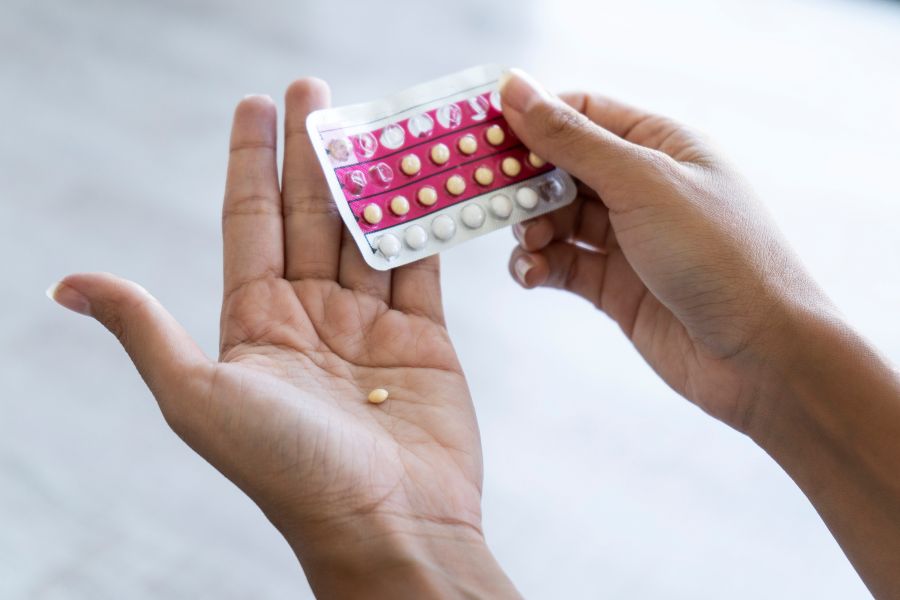
- Combined estrogen-progestin methods: pills, patches and vaginal rings are typically 91% effective with typical use
- Progesterone-only options: mini pills, Depo-Provera injections and Nexplanon implants, ranging from 96% to over 99% effective
- Non-hormonal methods: copper IUDs, condoms, diaphragms and natural family planning
For emergency contraception, she noted, “The copper IUD can be inserted up to five days after unprotected sex and is over 99% effective. Plan B is available over the counter, and Ella, which is prescription-only, works up to five days after unprotected sex.”
For women trying to conceive, tracking ovulation can help. Methods include the calendar method, ovulation predictor kits, basal body temperature monitoring and cervical mucus tracking.
Dr. Potter cautioned, “Human reproduction is very inefficient. Even if you’re ovulating and having timed intercourse, your monthly chances of pregnancy are only 15% to 20%. Don’t worry if it takes a couple of months to get pregnant — that’s very normal.”
Perimenopause and menopause
Perimenopause, the transition before menopause, usually begins in the mid- to late 40s and lasts four to five years.
“It is marked by irregular cycles, hot flashes, night sweats and mood changes due to changing hormone levels,” she said.
Menopause is diagnosed after 12 consecutive months without a period, with a median age of 51.5 in the U.S. Typical symptoms include hot flashes, vaginal dryness, sleep disturbances and mood changes.
Long-term health considerations include bone health and cardiovascular risk.
“Methods to optimize bone health include vitamin D and calcium supplementation, weight-bearing exercises, avoiding smoking and alcohol and routine screenings,” Dr. Potter advised.
Hormone replacement therapy can help with severe symptoms, while non-hormonal options include SSRIs, gabapentin and lifestyle adjustments.
Final thoughts
Dr. Potter emphasized the importance of paying attention to changes throughout a woman’s life.
“We went over puberty, the menstrual cycle, reproductive years, perimenopause, menopause and treatment options,” she said. “Understanding these stages and seeking care when abnormalities arise can empower women to maintain their health from adolescence through post-menopause.”
LEARN MORE ABOUT WOMEN'S SERVICES AT NORTHSIDE.
References:
- “Understanding the Phases of the Menstrual Cycle.” PubMed Central. https://www.ncbi.nlm.nih.gov/pmc/articles/PMC4400253/.
- American College of Obstetricians and Gynecologists. “Management of Menopausal Symptoms.” Practice Bulletin. https://www.acog.org/clinical/clinical-guidance/practice-bulletin/articles/2014/01/management-of-menopausal-symptoms.
- Crawford, Natalie, MD. Natalie Crawford MD. https://www.nataliecrawfordmd.com/.
- “Posts Tagged ‘North American Menopause Society (NAMS)’.” Women’s Mental Health. https://womensmentalhealth.org/posts/tag/north/american/menopause-society-nams/.