
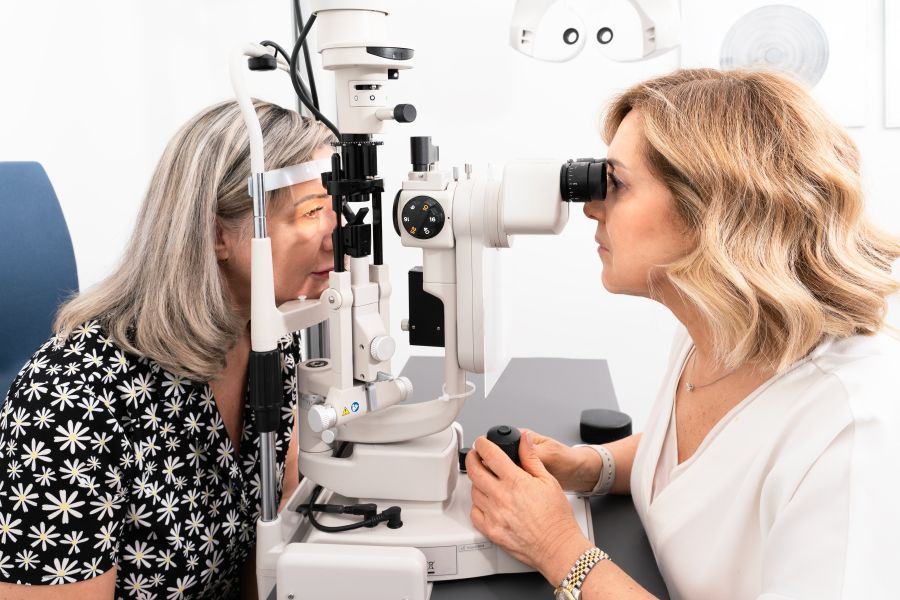
Glaucoma is a progressive eye disease that damages the optic nerve, which carries visual information from the eye to the brain. The condition is most often linked to elevated intraocular pressure, though glaucoma can also develop in people with normal eye pressure. Each eye has a level of pressure it can tolerate, and when that pressure is exceeded, damage to the optic nerve may occur. Over time, glaucoma typically leads to loss of peripheral, or side, vision. Without treatment, the disease can progress to central vision loss and, ultimately, blindness.
One of the challenges of glaucoma is that it often causes no noticeable symptoms in its early stages. Many people do not realize they have the condition until significant vision loss has already occurred. When symptoms do appear, the disease is often more advanced. Warning signs that should prompt a comprehensive eye examination include difficulty with side vision, trouble seeing in dim lighting, and, in rare cases, headaches, rainbow-colored halos around lights, or a red, painful eye.
Certain individuals face a higher risk of developing glaucoma. Risk factors include being over age 60, having moderate to high nearsightedness, being of African American or Latino descent, and having a family history of the disease. While glaucoma cannot be prevented, early detection is critical for preserving vision. Regular comprehensive eye exams that include measurements of eye pressure and dilation, along with sharing family health history with an eye care provider, can help identify glaucoma early. With timely diagnosis and treatment, disease progression can often be slowed and vision protected.
LEARN MORE ABOUT OPHTHALMOLOGY AT NORTHSIDE.