
For several decades, spinal fusion has been the gold standard for treating disc degeneration and other spinal conditions. Since the early 2000s, however, artificial disc replacement (ADR) for both cervical and lumbar disc degeneration has become a safe and effective alternative for patients who meet certain criteria.
Spinal fusion, which is still common, fuses vertebrae together, eliminating motion and, in many cases, exacerbating the degeneration of neighboring discs. Conversely, ADR preserves motion because it maintains the spine’s natural movement and helps reduce the risk of adjacent disc degeneration.
“Fusions have been tried and tested for several years,” said Matthew Hazzard, a neurosurgeon with Advanced Neurosurgery Associates. “But the potential of having the opportunity to preserve motion is appealing because you keep that segment moving longer, which helps not only range of motion, quality of life and reduction in pain, but also offsets the potential of adjacent segment problems.”
Criteria and patient selection
ADR may not be appropriate for every patient. For example, patients diagnosed with significant facet joint arthropathy, spinal instability or deformity, osteoporosis, active infection or severe psychological disorders, or those who are pregnant, are not candidates.
While many of Dr. Hazzard’s patients are in their 30s and 40s, good candidates can range from ages 18 to 60 and are generally healthy and active. To ensure the best possible outcome, physicians conduct a thorough assessment using specific criteria.
Cervical disc replacement criteria include:
- Single-level degenerative disc disease with radiculopathy or myelopathy
- Preserved facet joints without significant arthrosis
- Adequate bone density
- Age typically between 18 and 60
- Failed conservative management for at least six weeks
Lumbar disc replacement criteria include:
- Single- or two-level degenerative disc disease
- Predominant axial back pain with or without leg pain
- Preserved posterior elements (facets, ligaments)
- Adequate bone quality
- Height loss of less than 50% of the original disc space
If these criteria are met and conservative measures — such as physical therapy, medications, injections or dry needling — have failed, additional testing is performed.
“For either cervical or the lumbar spine, we generally start with dynamic X-rays,” Dr. Hazzard explained. “That helps to understand the bony anatomy of the spine, as well as how the spine moves and the alignment.”
Typically, he added, patients also receive an MRI to examine soft tissue and confirm that imaging findings match their symptoms. A CT scan may or may not be needed.
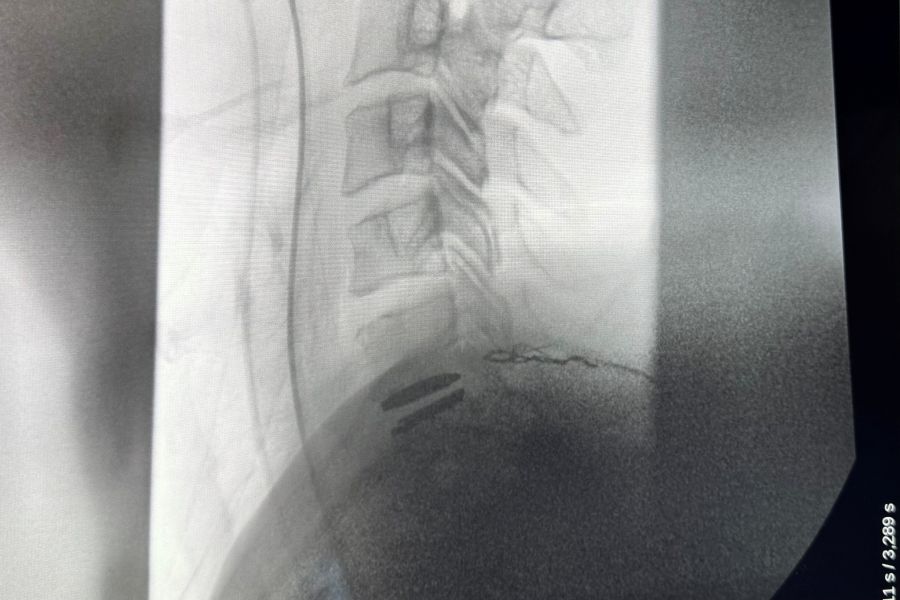
Using the latest imaging and navigation technologies, including intraoperative fluoroscopy and neuromonitoring, also improves surgical precision and safety.
“With newer technology and devices, and improved training, we see that outcomes are far better, even in terms of length of stay in the hospital,” he said. Cervical disc replacement, for example, is often performed as a same-day outpatient procedure. “For lumbar disc replacement, I usually like to watch people at least overnight, but I’ve had patients go home the same day for that as well.”
Recovery and outcomes
Recovery times for ADR compared with fusion are another significant benefit.
“For a cervical disc replacement, you’re going to be able to get back into your normal activities within one to two weeks. For lumbar discs, it’s about six to eight weeks, compared to three to six months’ minimum healing for a fusion,” Dr. Hazzard said.
Recent clinical studies support excellent long-term outcomes for both procedures in appropriate patients. Five-year follow-up data shows:
Cervical disc replacement:
- Clinical success rates of 85% to 92%
- Maintained range of motion at treated levels
- Low rates of adjacent segment disease (3% to 5% vs. 9% to 12% for ACDF)
- Revision surgery rates of less than 5%
Lumbar disc replacement:
- Good to excellent outcomes in 80% to 85% of patients
- Maintained flexion-extension motion
- Reduced disability scores compared with fusion
- Complication rates comparable to lumbar fusion when performed by experienced surgeons
Dr. Hazzard is optimistic that as technology advances and becomes more mainstream, more patients will have access to motion-preserving procedures.
“I am hopeful that within our lifetime there will be a paradigm shift further toward not only regenerative medicine, but preservation of motion — how we keep these joints and segments moving rather than how we stop them from moving,” he said.
LEARN MORE ABOUT NEUROSURGERY AT NORTHSIDE.
As appeared on MDAtl.com.