Let’s be honest — breast cancer doesn’t just shake up your health; it can rattle your entire sense of self. Between doctor appointments, treatment decisions and sleepless nights, it’s a lot to take in. And somewhere in this mix, you might find yourself asking, “Should I get plastic surgery?”
If that feels overwhelming, you are not alone. This article will walk you through the basics of what breast reconstruction is, what it involves and things to think about as you move forward. Many women explore this option as a part of their healing process, and whether you choose to reconstruct or not, what matters most is that the decision feels right for you.
So, what is breast reconstruction?
Breast reconstruction is surgery used to rebuild the shape and appearance of the breast after a mastectomy (removal of the entire breast) or lumpectomy (removal of part of the breast). It can be done using implants, your body’s own tissue or a combination of both. Some women choose to have reconstruction right away; others wait months or years — and some skip it altogether. It’s not about what you “should” do. It’s about what helps you feel most like yourself again.
Two main roads: implants vs. flap surgery
There are two main categories of reconstruction: implant-based reconstruction and autologous (also known as “flap”) reconstruction.
1. Implant-based reconstruction
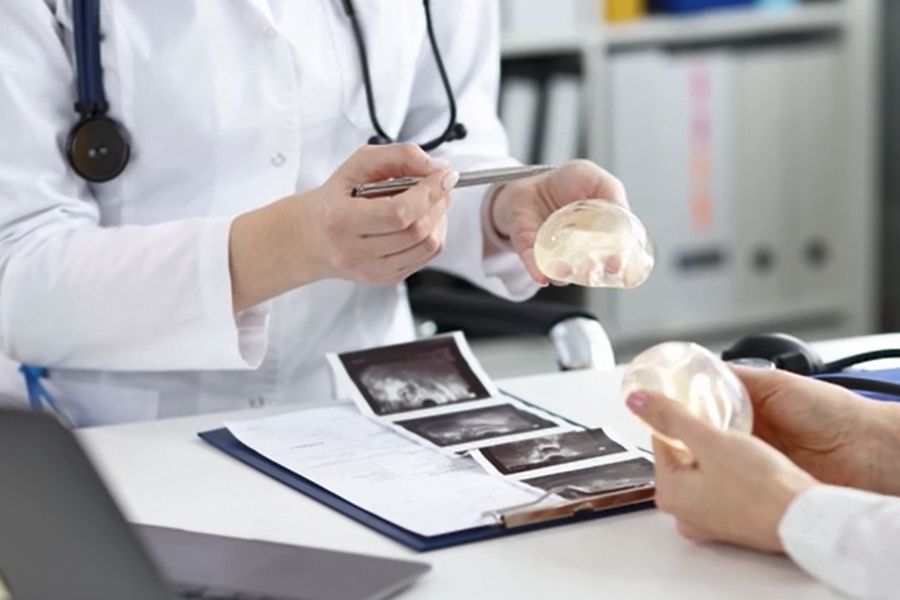
This option uses silicone or saline breast implants to recreate the shape of a breast. This is the most common type of reconstruction and is often done in stages after mastectomy. First, a temporary device called a tissue expander is placed in the area where breast tissue was removed to gently stretch the skin — sort of like a balloon placed under the skin. Later, the permanent implant can more easily go into the open space.
Why some women choose it:
This option usually involves a shorter surgery and recovery, and it doesn’t require surgery on another area of your body.
Things to keep in mind:
Implants may not feel quite like natural tissue, and they may need to be replaced years later.
2. Flap (or autologous) reconstruction
This technique uses your own tissue — often from the muscles on your belly or back — to rebuild your breast. You can think of it as a tissue “transplant” from one part of your body to another.
Why it’s appealing:
The results can look and feel more natural. And once it’s done, it’s done — no implants needed.
What to consider:
Flap procedures are longer surgeries with longer recovery, and you’ll have scars both on your chest and in the area where the tissue was taken.
Timing: now, later or never?
You can choose to have reconstruction at the same time as your mastectomy (immediate), after other treatments, like radiation (delayed), or not at all. Some women want to get it done all at once, while others prefer to wait and focus on healing first. Others choose not to have reconstruction, and that is equally valid.
Things to consider
Reconstruction is not one-size-fits-all. Here are a few things to think about:
- Your health: Certain medical conditions or treatments may affect your decision or options.
- Your lifestyle: Recovery time and physical demands vary between procedures.
- Your goals: Do you want to match your natural breast? Make changes? Are scars a concern?
- Your feelings: Some women feel reconstruction helps with body image; others are happy going flat.
It’s OK to feel uncertain or change your mind — even more than once. Remember to ask a lot of questions and, if you are able to, bring someone with you to appointments so you have the benefit of another set of ears.
You have options — including doing nothing
Here’s something not everyone will tell you: You don’t have to choose reconstruction. Many women decide to go flat (called aesthetic flat closure) and wear prosthetics, or nothing at all. And guess what? They are just as confident, beautiful and complete. This isn’t about “fixing” anything. It’s about choosing what makes you feel good — physically, emotionally and mentally.
One last thing
You don’t have to do this alone. You have a team — your surgeon, oncologist, nurses and, most importantly, other women who have walked down this road. Ask your care team for referrals to support groups or survivors who are open to sharing their experiences. Hearing real stories can be incredibly helpful.
Choosing to have breast reconstruction — and which type — is a personal decision. It’s OK to take your time, ask every question and change your mind. Whatever you decide, know that you are strong, supported and whole.
LEARN MORE ABOUT BREAST CANCER CARE AT NORTHSIDE.
References:
As originally appeared in Breast Cancer Wellness Magazine.